You Came With Instructions
You were not born a blank page. You arrived with instructions no one could read at first, not even you. Living, met with attention, is how they get decoded.

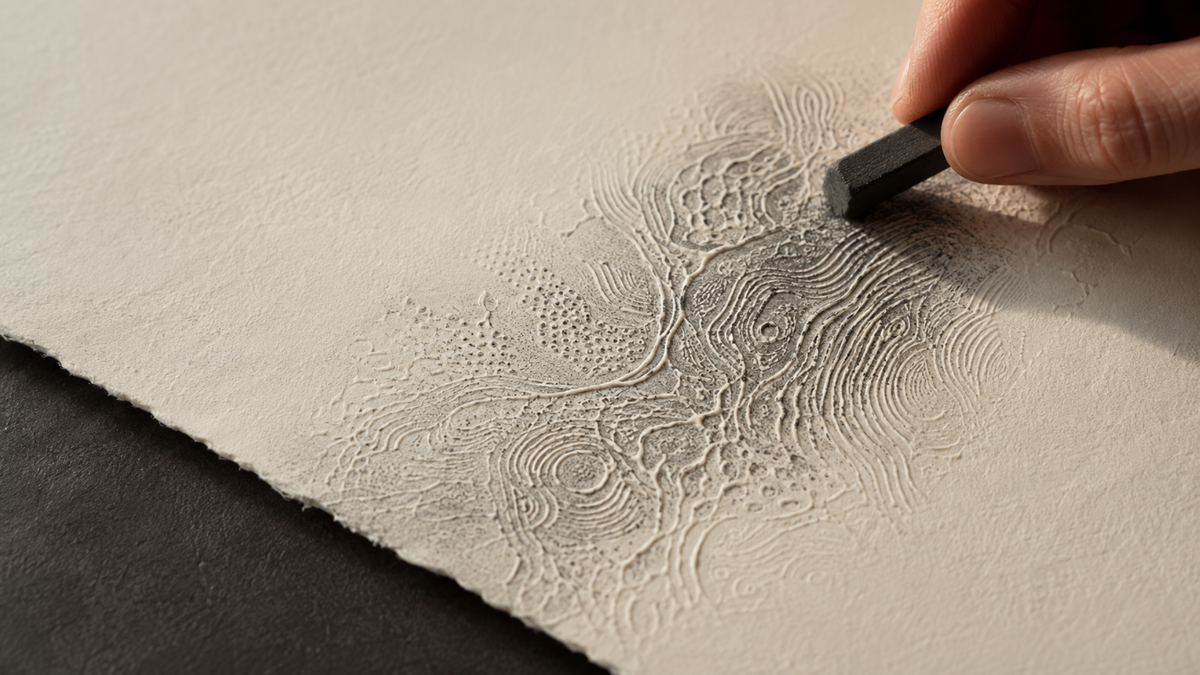
In Essence
You were not born a blank page waiting to be written by your circumstances. You arrived already written, carrying instructions no one around you knew how to read. Not your parents, not your teachers. Not even you.
That gap between what you are and what anyone could read created most of the early confusion. The labels, the comparisons, the sense of being different in a way you could not explain.
Nothing about you was ever missing. Some of it was just written in a language that takes living to learn.
And the decoding is not automatic. Life presents the lessons, but attention is what reads them.
The Blank Page Story
Somewhere along the way, most of us absorbed the idea that we start empty. A blank slate, shaped entirely by what happens to us. Under that story, becoming yourself is a construction project: gather influences, add skills, build an identity from the outside in.
The story sounds reasonable, until you hold it against your own earliest evidence.
You knew things before anyone taught you. You moved toward certain things and away from others before you had reasons. You had a way about you, a signature, that showed up in how you played, what you noticed, what you could not stop doing even when it was discouraged. None of that was constructed. It was there when you arrived.
What follows is a different story. I offer it as a lens, the way I hold it myself, and you can test it against your own evidence instead of taking my word for it. That testing is the whole point.
What Does It Mean to Come With Instructions?
Coming with instructions means you arrived with an inner design, a set of natural inclinations, sensitivities, gifts, and ways of moving through the world that were present before your environment had any say.
This is not a claim that circumstances do not matter. They matter enormously. But circumstances are the weather your design grows in, not the design itself.
The confusion starts because instructions are not the same as understanding. A design can run perfectly while remaining completely unread. Your sensitivity worked from day one. Your intensity worked. What was missing was not function. It was translation, and no one around you had it. They read you through their own instructions instead, and where the two did not match, you got a label.
Why the Labels Felt True
Too sensitive. Too intense. Too quiet. Too much. Too scattered. Too stubborn.
When you are young, a label does not stay a word. It becomes who you are. A child does not evaluate a label. A child absorbs it. And the people naming you were the same people keeping you alive, so their reading of you carried the weight of reality.
Here is what was actually happening. They were describing the difference between your instructions and their expectations, and calling the difference a flaw. The label was never a measurement of you. It was a measurement of the gap.
Most of what you were told was wrong with you was a feature no one could translate yet, including you.
How Does the Decoding Actually Happen?
The decoding happens through lived experience met with attention. Life presents the material, and awareness turns the material into understanding.
This is worth being precise about, because the passive version of this idea is everywhere and it is not true. Time alone does not decode anything. A person can move through decades of rich, difficult, instructive experience and arrive at the end a stranger to themselves, because experience without attention is just weather passing through.
Your lessons are matched to your instructions. What drains you and what restores you. What you keep returning to no matter how many times you set it down. What you knew before anyone taught you. The moments something in you said no before your mind found the argument. Each one is a part of your manual being revealed, and each one only becomes readable when you actually look at it.
This is where inner guidance stops being a lovely idea and becomes a practical skill. The signal has been transmitting your whole life. Attention is how you tune to it. Trust is how you keep the channel open. Discernment is how you learn, over years, to tell the sound of your own instructions from the noise of expectations. Some of that noise comes from other people. Plenty of it now lives inside you: borrowed expectations and conditioning absorbed so early they speak in your own voice. Family patterns, cultural rules, traditions in the largest and smallest sense, received by people who were handed them the same way.
What You Notice When You Start Reading
The early pages tend to be corrections. Things you believed were flaws start rereading as features. The sensitivity that made you too much turns out to be the exact instrument that lets you sense what others miss. The stubbornness reveals itself as devotion to something true that you could not yet name.
You also start noticing that certain struggles were never yours. They arrived as hand-me-downs: instructions and expectations passed through generations, carried by people who never got the chance to read themselves, given to you because it was all they knew to give. Recognizing what is not yours is as much a part of the decoding as recognizing what is. And there is tenderness available here, because the ones who passed it down were running unread instructions of their own.
None of this requires becoming someone new. That is the strange relief of it. The work is not construction. It is recovery.
Living as a Reader of Yourself
You do not need to have yourself fully decoded. No one does, and the manual seems to have more pages than one life reveals.
What changes everything is the posture shift: from seeing yourself as a problem into recognizing yourself as a language. You cannot solve yourself from the same place the confusion was created. But you can study yourself the way a language is studied: with patience, with curiosity, with the assumption that everything in it means something even when the meaning has not surfaced yet.
And a language is a living thing. It evolves with the ones who speak it. This is where the instructions stop being a cage. An architect builds from a blueprint, and still the finished building can depart from it, adapted to the land, improved mid-construction. Reading your design does not lock you into it. It gives you something real to build with. And the longer you read, the more you notice something that was true all along: you were never only the reader. You have been co-authoring the whole time. Reading is how the participation becomes conscious.
Your instructions are patient. They have been transmitting since before you had words, and they will keep knocking until you answer. You are not behind. You were written in a language worth learning, and living is how it gets read.
Which part of your instructions is asking to be decoded right now?